A NIGHT AT THE OPERA
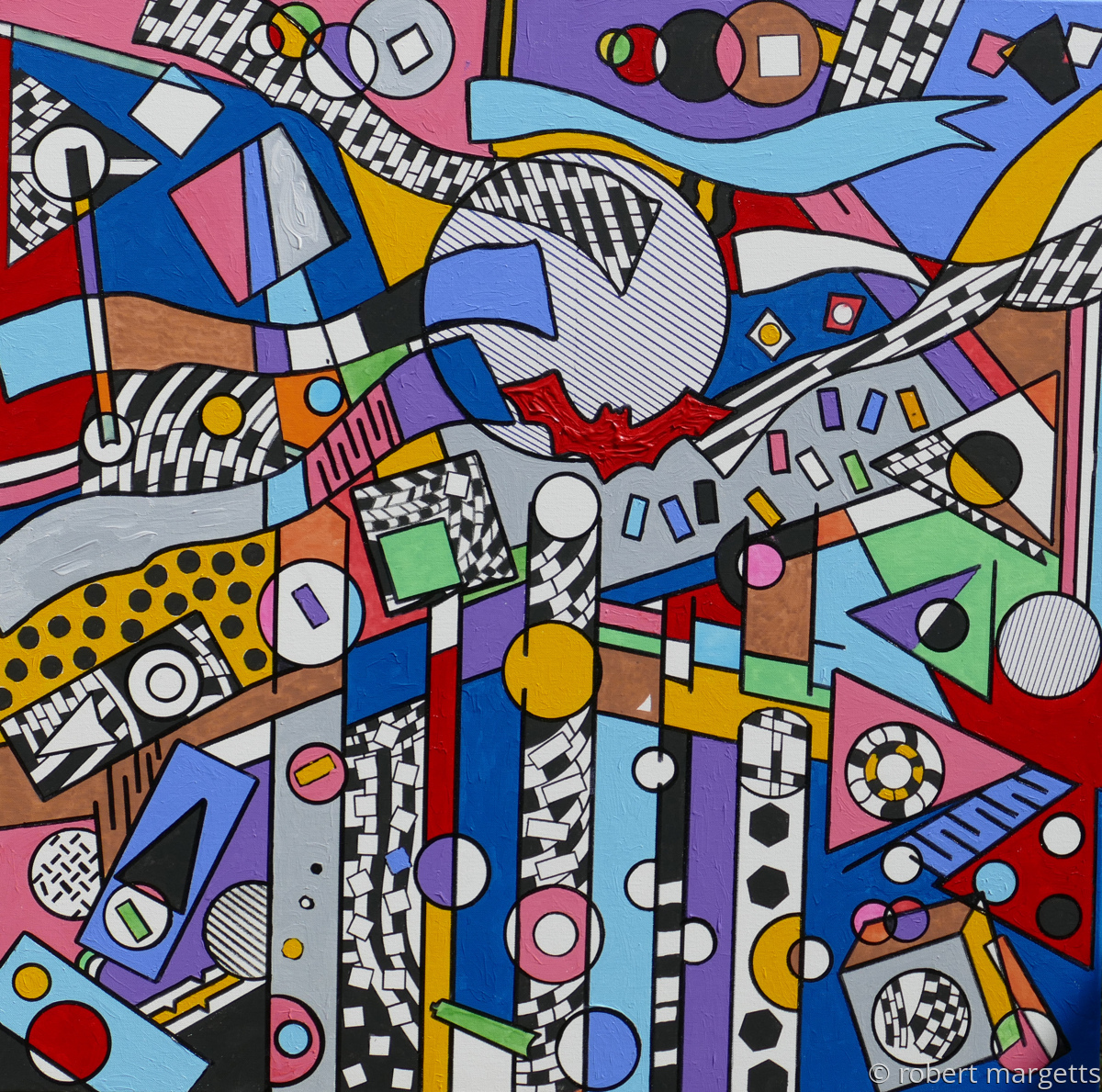
There is a particular electricity in this painting—an internal voltage—that recalls the great geometric abstractionists of the mid‑century, yet refuses to imitate them. What we see here is not homage; it is autobiography disguised as geometry.
The canvas is a battlefield of shapes: circles colliding with triangles, rectangles interrupting arcs, lines slicing through color fields with surgical precision. But beneath this formal rigor lies something far more intimate. The painting vibrates with the unmistakable tension of a man attempting to reassemble himself from the fragments of his own experience.
The color palette is fearless.
Reds and yellows ignite like emotional flare‑ups.
Blues and purples brood in the corners.
Black acts as both anchor and threat.
White is the breath between blows.
This is not decorative color.
This is psychological color.
The checkerboard patterns and striped passages introduce a rhythmic insistence—visual percussion—that prevents the eye from resting. The painting refuses serenity. It demands engagement. It insists that the viewer feel the same internal restlessness that clearly animated its creation.
And then there is the circle—large, central, and wounded. It is the gravitational heart of the composition, yet it is not whole. It is intersected, divided, interrupted. This is the symbol of a man whose emotional core has been cut into pieces but refuses to disappear.